Table of Contents
How to Serve on a Local Board or Commission in Your Community: Your Path to Civic Leadership
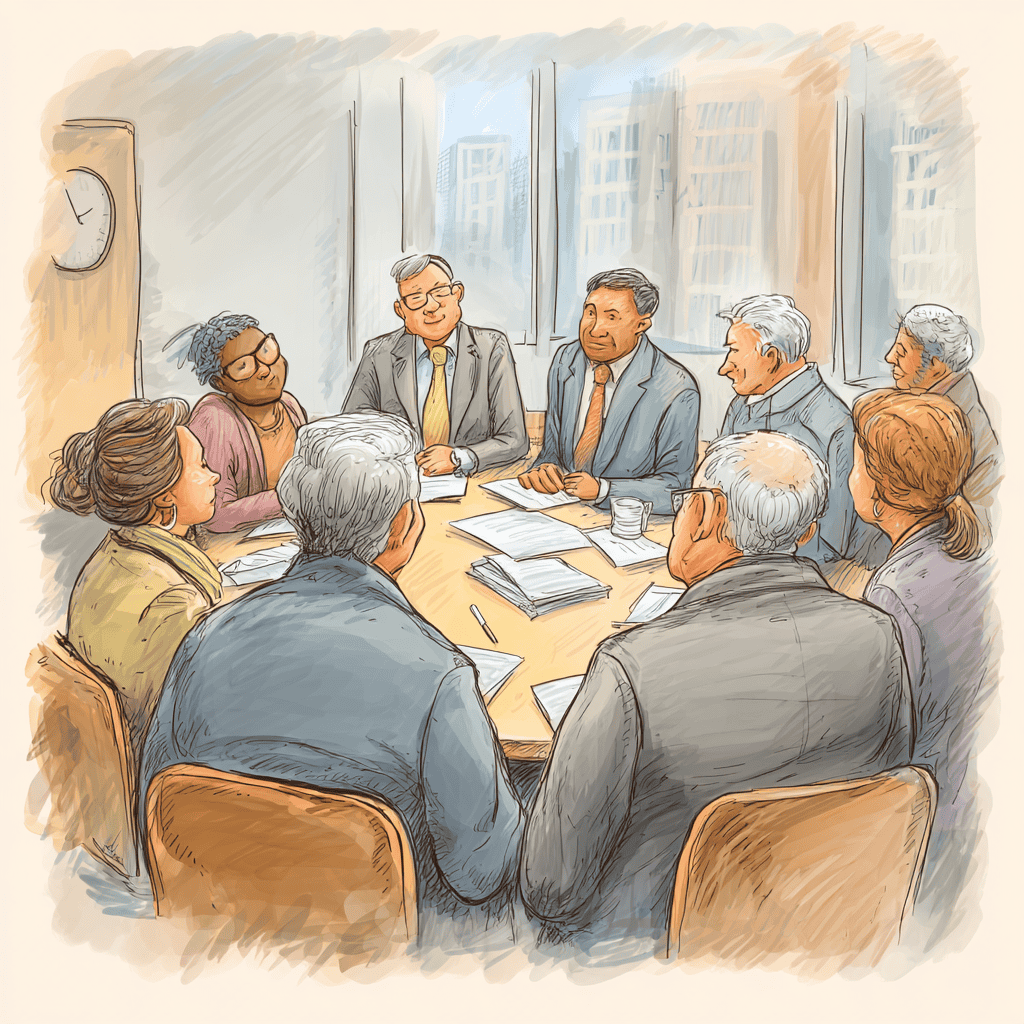
In a small conference room at city hall, seven volunteers gather around a table covered with development plans, traffic studies, and community feedback forms. They’re not elected officials or paid staff—they’re members of the local planning commission, ordinary citizens who spend their Tuesday evenings shaping their community’s future. Their decisions tonight will determine whether a new apartment complex gets built, how traffic flows through neighborhoods, and what the city looks like for generations to come.
Across America, thousands of local boards and commissions quietly wield enormous influence over daily life. These volunteer bodies decide everything from library hours to building heights, park designs to police oversight. Yet despite their importance, most citizens don’t know these opportunities exist, how to join them, or what serving actually entails. This knowledge gap means crucial community decisions often get made by the same small group of engaged residents, missing diverse perspectives that could strengthen outcomes.
Serving on a board or commission offers one of the most accessible and impactful ways to shape your community without running for elected office. Whether you’re passionate about education, environment, arts, or economic development, there’s likely a board where your voice and expertise are needed. Understanding how to navigate the application process, what service requires, and how to be effective once appointed can transform you from concerned citizen to community leader.
Understanding Local Boards and Commissions
What These Bodies Actually Do
Local government boards and commissions are formally established groups that assist elected officials in governing communities. Unlike city councils or county commissions whose members are elected, these bodies typically consist of appointed volunteers who bring specialized expertise or community perspectives to specific policy areas. They serve as bridges between professional staff, elected officials, and the public, ensuring that decisions reflect both technical requirements and community values.
The scope of authority varies dramatically among different boards. Some possess quasi-judicial power, making binding decisions on matters like zoning variances or business licenses. Others serve purely advisory roles, studying issues and making recommendations that elected officials can accept or reject. Still others function as oversight bodies, monitoring government operations and ensuring accountability. Understanding these distinctions is crucial because they determine both the impact you can have and the responsibilities you’ll shoulder.
Most communities maintain 10-30 different boards and commissions, though larger cities might have over 100. This proliferation reflects modern governance complexity—elected officials can’t possibly master every issue from architectural design standards to youth sports league management. By delegating certain functions to appointed bodies, governments tap into community expertise while maintaining democratic oversight through the appointment process and ultimate council authority.
The legal framework governing boards and commissions derives from state law, city charters, and local ordinances. State enabling legislation typically authorizes certain boards like planning commissions, defining their basic powers and procedures. Local governments then establish additional bodies through ordinances that specify membership, terms, duties, and decision-making authority. These founding documents become crucial references for understanding your role and limitations as a board member.
Types of Boards and Commissions
Planning and Development Boards
Planning commissions arguably wield more influence over communities’ physical evolution than any other appointed body. They review development proposals, recommend zoning changes, and update comprehensive plans that guide growth for decades. Members evaluate whether proposed projects comply with zoning codes, comprehensive plans, and development standards. They balance property rights with community character, economic development with environmental protection, and growth with infrastructure capacity.
The zoning board of appeals (sometimes called board of adjustment) provides relief from strict zoning requirements when literal enforcement would cause unnecessary hardship. They hear requests for variances—permission to deviate from specific standards like setback requirements or height limits. They also interpret zoning ordinances when ambiguity exists and hear appeals of administrative decisions. This quasi-judicial role requires members to apply legal standards while considering individual circumstances.
Historic preservation commissions protect communities’ architectural and cultural heritage. They review proposed changes to historic buildings, designate landmarks and districts, and educate the public about preservation. Members must balance preservation goals with property owners’ rights and economic realities. These commissions often become lightning rods for controversy as they navigate between development pressures and heritage protection.
Quality of Life and Community Service Boards
Parks and recreation commissions oversee public spaces and programs that define community character. They recommend park improvements, review recreation program offerings, and sometimes manage substantial budgets for facilities and activities. Members help determine whether communities prioritize active sports fields or passive green spaces, elaborate playgrounds or natural areas, programs for youth or seniors.
Library boards govern institutions that remain vital community anchors despite digital transformation. They set policies on collection development, approve budgets, and hire library directors. Modern library boards grapple with evolving roles—should libraries prioritize traditional book lending or transform into community technology centers? How should they handle controversial materials? What services should they provide to homeless populations?
Arts and cultural commissions promote creative expression and cultural vitality. They might manage public art programs, administer grants to local artists and organizations, or organize community festivals. These commissions help communities express their identity and values through cultural investments. Members often bridge between artistic communities and government bureaucracies that speak different languages.
Public Safety and Health Boards
Police oversight boards have gained prominence amid national conversations about law enforcement accountability. These bodies review citizen complaints, monitor department policies, and recommend reforms. The extent of their authority varies widely—some can compel officer testimony and recommend discipline, while others merely advise. Members navigate between supporting law enforcement and ensuring accountability, often in highly charged political environments.
Board of health members address community wellness from disease prevention to restaurant inspections. They might set local health regulations, review epidemiological data, or oversee public health programs. The COVID-19 pandemic thrust these normally low-profile boards into controversy as they made decisions about business closures, mask mandates, and vaccination requirements.
Emergency management commissions prepare communities for disasters from natural catastrophes to technological failures. They review emergency plans, coordinate between agencies, and educate the public about preparedness. Climate change and increasing disaster frequency make these boards increasingly important as communities adapt to new threats.
Specialized and Advisory Boards
Human relations commissions promote equality and address discrimination in communities. They might investigate civil rights complaints, conduct education programs, or advise on policies affecting marginalized groups. These commissions often tackle communities’ most sensitive issues around race, religion, sexuality, and other identity markers.
Environmental commissions advise on sustainability and conservation issues. They might review development impacts on natural resources, promote renewable energy adoption, or manage community gardens. As climate change accelerates, these bodies help communities reduce emissions and adapt to environmental changes.
Economic development authorities work to attract businesses, create jobs, and strengthen local economies. They might administer tax incentive programs, manage business incubators, or market communities to employers. Members must balance growth desires with community character preservation and ensure development benefits all residents.
The Real Impact of Board Service
Shaping Physical Communities
Board decisions create the physical environments where people live, work, and play. A planning commission’s approval of a mixed-use development transforms a vacant lot into homes for hundreds of families, retail spaces for local businesses, and gathering places for community life. Their rejection of a big-box store preserves small-town character but might limit shopping options and tax revenue. These decisions ripple through communities for generations.
Consider the historic preservation commission that designates a neighborhood as a historic district. This decision can protect architectural character and boost property values, but also increases renovation costs and limits property rights. The commissioners must weigh preservation benefits against economic impacts, considering how their decision affects long-time residents, property investors, and future generations who will inherit these spaces.
Parks and recreation boards determine whether communities prioritize elaborate sports complexes or neighborhood parks, swimming pools or skate parks, programs for competitive athletes or casual participants. A decision to build soccer fields instead of basketball courts shapes which sports children play, which communities feel welcomed, and how public spaces get used for decades.
Influencing Daily Life
Board decisions touch residents’ daily experiences in countless ways, often invisibly. The library board that extends evening hours enables working parents to access services. The transit advisory board that recommends new bus routes connects residents to jobs and services. The arts commission that funds murals transforms blank walls into community expressions.
Public health boards’ decisions about restaurant inspections, immunization requirements, and health education programs protect community wellness. Their choices about allocating limited resources—should they prioritize diabetes prevention or substance abuse treatment?—affect which health challenges get addressed and which populations receive services.
School boards, though often elected rather than appointed, demonstrate appointed boards’ potential impact. They hire superintendents, approve budgets, and set policies affecting thousands of students. Decisions about curriculum, discipline policies, and resource allocation shape educational opportunities and life trajectories for entire generations.
Building Social Capital and Civic Infrastructure
Beyond specific decisions, boards and commissions strengthen democratic culture by creating spaces for civic participation. They provide venues where citizens with different perspectives must work together toward common goals. A conservative business owner and progressive environmentalist serving together on a planning commission must find common ground on development proposals. This collaborative work builds understanding across difference and strengthens community cohesion.
Board service develops civic leaders. Today’s planning commission member might become tomorrow’s city council candidate. The skills, knowledge, and networks developed through board service prepare citizens for greater responsibilities. Many elected officials began their public service on appointed boards, learning how government works and building name recognition.
These bodies also create transparency and accountability in government operations. Citizen members ask questions that staff might not consider, bring perspectives that professionals miss, and ensure decisions reflect community values rather than just technical requirements. They serve as interpreters between government and community, explaining complex issues to neighbors and bringing citizen concerns to officials.
Getting Started: How to Join a Board or Commission
Researching Available Opportunities
Begin by visiting your local government’s official website, typically found at [your city].gov or [your county].gov. Most maintain a “Boards and Commissions” section listing all bodies, their responsibilities, meeting schedules, and current members. Well-organized sites include vacancy announcements, application deadlines, and qualification requirements. If information isn’t readily available online, contact the city or county clerk’s office directly—they typically coordinate board appointments.
Study each board’s enabling legislation or ordinance to understand its actual authority and responsibilities. A parks commission that merely advises on policy requires different commitment than one managing multimillion-dollar budgets. Read recent meeting minutes to understand what issues they actually address. That “boring” planning commission might be deciding your neighborhood’s future, while the “exciting” arts commission might mostly review grant applications.
Attend meetings of boards that interest you before applying. Most are open to the public, though some like personnel boards might have closed sessions. Observing actual meetings reveals dynamics you won’t find in official descriptions—is discussion collaborative or contentious? Do members seem prepared and engaged? Does staff respect member input? This reconnaissance helps you choose boards matching your interests and temperament.
Talk to current or former board members about their experiences. They can provide insights about time commitments, political dynamics, and actual impact. LinkedIn makes finding these individuals easier—search for your city plus “board member” or “commission.” Most members are happy to discuss their service with interested citizens. Their candid perspectives might steer you toward or away from certain boards.
Understanding Eligibility and Requirements
Residency requirements typically mandate living within the jurisdiction for a specified period, though some boards allow non-resident business owners or property owners to serve. Age requirements usually mirror voting age, though youth commissions might seek younger members while senior commissions want older participants. Some positions require specific expertise—architectural review boards might mandate design professionals—while others seek general community representation.
Consider potential conflicts of interest before applying. If you’re a developer, serving on the planning commission might create conflicts. If you own rental property, the housing board might be problematic. While some conflicts can be managed through recusal, others might disqualify you entirely. Financial disclosure requirements vary by jurisdiction and board type—some require detailed statements of economic interests while others need only basic conflict acknowledgments.
Time commitments extend beyond monthly meetings. Budget season might require extra sessions. Site visits consume Saturday mornings. Reading packet materials takes hours. Subcommittee work adds meetings. Community events need board representation. While requirements vary, expect to dedicate 5-15 hours monthly to meaningful board service. High-profile boards during controversial periods can demand much more.
Political considerations, though rarely acknowledged openly, influence appointments. Elected officials typically appoint board members, often seeking philosophical alignment. Research who makes appointments—mayor, individual council members, or full council vote. Understanding appointment dynamics helps you position applications strategically. If the conservative mayor appoints planning commission members, emphasizing property rights might help; if the progressive council majority decides, highlighting equity concerns might resonate.
Crafting a Compelling Application
Your application must demonstrate both qualification and commitment. Generic applications get ignored; successful candidates show specific understanding of the board’s work and clear reasons for interest. Start your personal statement by explaining why this particular board matters to you. Perhaps you’re frustrated by traffic congestion and want to join the transportation commission, or you’re passionate about youth development and seek parks board appointment.
Highlight relevant experience without overstating qualifications. Professional expertise certainly helps—accountants on audit committees, architects on design review boards—but lived experience matters too. Parents understand school issues, transit riders know system problems, and small business owners grasp economic development challenges. Frame your experience as perspective that adds value rather than superiority over other viewpoints.
Address potential concerns proactively. If you’re new to the community, emphasize fresh perspectives and commitment to learning. If you lack formal education, highlight practical experience and community connections. If you have limited time, specify exactly what you can commit and how you’ll manage responsibilities. Honest acknowledgment of limitations builds trust better than overcommising and underdelivering.
Provide specific examples of your community involvement and collaborative skills. Describe situations where you worked with diverse groups, resolved conflicts, or achieved consensus. Board service requires working with people holding different views, so demonstrating this capacity is crucial. References should attest not just to your expertise but to your ability to listen, collaborate, and compromise.
Navigating the Selection Process
After submitting applications, prepare for potential interviews with elected officials or selection committees. Research current community issues and the board’s recent decisions. Prepare thoughtful responses about controversial topics without appearing inflexible. If asked about a contentious development proposal, acknowledge multiple perspectives rather than taking rigid positions. Show that you can evaluate issues fairly rather than bringing predetermined outcomes.
Understand that appointment decisions involve multiple factors beyond individual qualifications. Officials seek geographic diversity, ensuring different neighborhoods have representation. They want demographic balance reflecting community composition. They consider professional backgrounds, aiming for varied expertise. They balance continuity and fresh perspectives. Your rejection might reflect these broader considerations rather than individual shortcomings.
Network strategically but appropriately. Attending council meetings and community events increases visibility. Volunteering for community organizations demonstrates commitment. Supporting elected officials’ campaigns creates relationships. However, avoid appearing to “buy” appointments through excessive political contributions or seeming entitled to positions. The goal is demonstrating genuine community engagement, not political manipulation.
If not appointed initially, stay engaged and try again. Thank officials for considering your application. Continue attending meetings of interest. Volunteer for related community work. Build relationships and expertise. Many successful board members applied multiple times before appointment. Persistence demonstrates genuine commitment rather than resume-building.
Succeeding as a Board Member
Mastering Your Role and Responsibilities
Once appointed, invest time understanding your board’s legal framework and actual authority. Read the enabling legislation, bylaws, and relevant ordinances carefully. Understand what decisions you can make independently versus what requires council approval. Know when you can speak publicly about board business and when confidentiality applies. Legal boundaries aren’t suggestions—violating them can create personal liability and undermine board credibility.
Learn the technical knowledge your board requires. Planning commissioners should understand zoning principles, density calculations, and traffic analysis basics. Parks board members need familiarity with recreation trends, facility maintenance, and program evaluation. While you needn’t become an expert immediately, developing working knowledge enables meaningful participation. Many communities offer training for new board members, and national organizations like the American Planning Association provide excellent resources.
Master meeting procedures and decision-making processes. Understanding Robert’s Rules of Order, open meeting laws, and public hearing requirements enables effective participation. Learn how to make motions, offer amendments, and navigate parliamentary procedure. Know when public comment occurs and how deliberation should proceed. Procedural knowledge empowers you to advocate effectively for your positions while respecting legal requirements.
Build productive relationships with staff who provide professional expertise and institutional knowledge. Respect their experience while maintaining independent judgment. Ask questions that elicit useful information rather than seeming hostile or ignorant. Understand that staff have studied issues extensively and bring valuable perspective, but also remember that you represent community values they might not fully appreciate. The most effective boards blend professional expertise with community wisdom.
Effective Meeting Participation
Preparation determines participation quality. Read packet materials thoroughly before meetings, noting questions and concerns. Research unfamiliar terms or concepts rather than asking basic questions during meetings. Contact staff before meetings with clarification questions, allowing them to prepare responses or additional information. Coming prepared respects everyone’s time and enables substantive discussion.
Listen more than you speak, especially initially. Learn board dynamics, understand recurring issues, and identify knowledge gaps before asserting strong positions. When you do speak, add value through new perspectives rather than repeating others’ points. Ask probing questions that advance discussion rather than grandstanding. Respect time limits and stay focused on agenda items rather than pursuing tangential interests.
Disagree respectfully and productively. Board work involves reconciling different values and priorities, so conflict is inevitable. Focus on substantive disagreements rather than personal attacks. Acknowledge others’ valid concerns even when reaching different conclusions. Seek creative compromises that address multiple interests rather than pursuing zero-sum victories. Remember that today’s opponent might be tomorrow’s ally on different issues.
Maintain appropriate relationships with applicants and the public. Be accessible and responsive to community input while avoiding prejudgment of issues. Listen to concerns without making commitments about votes. Direct constituents to proper channels for routine matters rather than trying to solve every problem personally. Balance openness with the impartiality required for quasi-judicial decisions.
Building Influence and Impact
Developing expertise in specific areas increases your influence. Become the board member others turn to for understanding financial implications, environmental impacts, or legal requirements. This expertise need not be formal—intimate knowledge of neighborhood conditions or specific populations can be equally valuable. Recognized expertise earns respect and shapes discussions even when you’re not speaking.
Volunteer for subcommittees and working groups where much real work occurs. These smaller groups allow deeper engagement with issues and stronger relationship building. Leading a successful subcommittee effort establishes leadership credentials. The comprehensive plan update subcommittee or budget review working group might seem boring but offer tremendous influence over important decisions.
Build coalitions around shared interests. Find common ground with members you might typically oppose—the fiscal conservative and environmental advocate might both support green infrastructure that saves money while protecting resources. Strategic alliances can achieve results neither side could accomplish alone. Avoid rigid factions that prevent flexible response to specific issues.
Connect board work to broader community conversations. Write op-eds explaining complex issues or important decisions. Speak to community groups about board initiatives. Use social media responsibly to increase transparency and engagement. Becoming a trusted voice on your board’s issues increases both personal influence and the board’s community standing.
Common Challenges and How to Navigate Them
Dealing with Political Pressure
Board members often face pressure from elected officials who appointed them, especially on controversial issues. While appointees should generally share appointing officials’ philosophy, you’re not their puppet. Maintain independence while being politically aware. If pressured inappropriately, document interactions and consider discussing with board counsel. Remember that your duty is to the community, not political patrons.
Interest groups—developers, neighborhood associations, business organizations—will try to influence decisions. Meeting with stakeholders is appropriate and valuable, but maintain clear boundaries. Don’t accept gifts or favors that create obligations. Be transparent about contacts and avoid private commitments. When pressured intensely, refer to your duty to consider all perspectives and follow legal requirements.
Campaign seasons can politicize board work as candidates use decisions as campaign issues. Stay focused on board responsibilities rather than getting drawn into political fights. Avoid partisan activities that compromise board neutrality. If running for office yourself, understand resignation requirements and conflict rules. Some effective board members damage their reputation by inappropriately mixing board service with political ambitions.
Managing Time and Workload
The reality of board service often exceeds initial expectations. Reading hundreds of pages of technical documents, attending lengthy meetings, and responding to community concerns can overwhelm. Develop efficient systems for managing materials—digital tools, filing systems, and reading strategies. Learn to identify crucial information quickly rather than reading everything equally carefully.
Set boundaries to prevent burnout. You can’t attend every community meeting, respond to every email immediately, or investigate every issue personally. Focus on your board’s core responsibilities rather than trying to solve all community problems. Delegate to staff when appropriate rather than taking on operational tasks. Quality participation in focused areas beats scattered attention across everything.
Balance board service with other life commitments. Family, work, and personal needs don’t disappear when you join a board. Be realistic about what you can commit and communicate limitations clearly. Missing occasional meetings for important personal reasons is better than burning out and resigning. Most boards prefer reliable long-term members over briefly intense but unsustainable participation.
Handling Difficult Decisions and Controversy
Controversial decisions are inevitable in board service. Whether approving unpopular developments, cutting beloved programs, or taking stands on divisive issues, you’ll face criticism. Develop thick skin while remaining open to legitimate concerns. Distinguish between personal attacks you should ignore and substantive criticism deserving consideration.
Make decisions based on evidence, law, and community values rather than loudest voices. Vocal minorities can dominate public hearings, but your responsibility is to the entire community. Use multiple input sources—surveys, focus groups, statistical data—to understand broader community sentiment. Document your reasoning for controversial decisions to demonstrate thoughtful deliberation rather than arbitrary choice.
When facing intense controversy, maintain personal security awareness. High-profile decisions can trigger threatening behavior from unstable individuals. Report threats to law enforcement, vary routines if necessary, and maintain situational awareness. While actual violence is rare, taking reasonable precautions protects both you and your family.
The Bigger Picture: Board Service and Democracy
Strengthening Democratic Governance
Boards and commissions democratize expertise in government decision-making. Rather than relying solely on professional staff or elected generalists, these bodies bring specialized knowledge and diverse perspectives into governance. A planning commission combining architects, engineers, businesspeople, and neighborhood activists produces better decisions than any single perspective could achieve.
These bodies also provide democratic oversight of government operations. Citizen members ask questions that challenge bureaucratic assumptions, ensuring government serves community rather than organizational interests. They bridge between technical requirements and community values, translating complex issues into understandable terms and bringing citizen concerns into technical discussions.
Board service creates 培training grounds for democratic leadership. Members learn how government actually works—the gap between campaign promises and governing realities, the complexity of seemingly simple issues, the necessity of compromise. This education produces more effective future elected officials and more informed citizens regardless of further political ambition.
Building Inclusive Communities
Diverse boards make better decisions by incorporating varied perspectives and experiences. Racial, ethnic, and economic diversity ensures decisions consider all community members rather than just dominant groups. Age diversity brings both historical memory and future orientation. Professional diversity combines different analytical frameworks and knowledge bases.
Yet achieving meaningful diversity requires intentional effort. Traditional recruitment through existing networks tends to reproduce current composition. Effective diversification requires reaching into underrepresented communities, addressing participation barriers like meeting times and locations, and creating inclusive environments where all voices are valued.
Boards can advance equity by considering differential impacts of decisions on various populations. How does a proposed development affect longtime residents versus newcomers? Do park investments serve all neighborhoods equally? Are meeting procedures accessible to non-English speakers? Equity lens application to board decisions can reduce disparities and build more inclusive communities.
Responding to Contemporary Challenges
Modern boards face challenges unknown to previous generations. Climate change requires considering long-term resilience in every decision. Technology transformation demands digital equity consideration and cyber security awareness. Demographic shifts and political polarization complicate consensus building. Global pandemics reveal new vulnerabilities requiring adaptive responses.
These challenges require boards to evolve beyond traditional approaches. Static comprehensive plans must become adaptive management frameworks. Single-issue focus must expand to consider intersections and unintended consequences. Local perspective must incorporate regional coordination and global awareness. Yesterday’s best practices might be tomorrow’s obstacles.
Yet these challenges also create opportunities for innovation and leadership. Boards experimenting with new approaches—online engagement tools, equity assessments, climate adaptation planning—can model solutions for other communities. Local innovation through board leadership can influence state and national policy. Your board’s creative solution to a local challenge might become tomorrow’s best practice.
Making the Decision: Is Board Service Right for You?
Assessing Your Readiness
Before applying, honestly evaluate your capacity for meaningful service. Do you have 5-15 hours monthly for meetings, preparation, and related activities? Can you commit to a multi-year term despite potential life changes? Are you willing to make difficult decisions that might upset friends or neighbors? Honest self-assessment prevents overcommitment that damages both you and the board.
Consider your motivations for serving. Desire to contribute to community improvement provides sustainable motivation through difficult periods. Interest in specific issues or expertise to share offers valuable foundation. Political ambition alone often leads to frustration when board work proves less glamorous than anticipated. Single-issue advocacy can blind you to broader responsibilities and alienate colleagues.
Evaluate your temperament for public service. Can you remain calm when citizens yell at you during public hearings? Will you maintain confidentiality when required? Can you accept being outvoted gracefully? Do you have patience for lengthy deliberations and bureaucratic processes? Emotional intelligence matters as much as subject expertise for effective board service.
Alternative Ways to Engage
If board service doesn’t fit your current circumstances, consider alternative engagement methods. Advisory committees and task forces often require less time commitment while still providing input opportunities. Volunteer positions with community organizations offer flexible involvement. Attending meetings and providing public comment influences decisions without formal appointment.
Professional services can support board work without membership. Architects might provide pro bono design assistance. Attorneys could offer legal analysis. Accountants might review financial reports. Teachers could facilitate community engagement. These contributions can be equally valuable while requiring less ongoing commitment.
Starting with less demanding positions builds toward future board service. Neighborhood association leadership develops skills and visibility. Campaign volunteering creates political relationships. Community event organizing demonstrates leadership capacity. These experiences strengthen future board applications while providing immediate engagement opportunities.
Conclusion: How to Serve on a Local Board
Serving on a local board or commission represents one of democracy’s most accessible and impactful participation opportunities. While less visible than elected office, board service shapes communities in profound ways—determining where children play, how neighborhoods develop, which services get funded, and how governments operate. Every planning commission decision influences community character for decades. Every parks board choice affects residents’ quality of life. Every library board policy shapes access to knowledge and opportunity.
This service demands real commitment—hours of reading dense documents, long evenings in contentious meetings, difficult decisions that upset some community members. You’ll face political pressure, time management challenges, and occasional harsh criticism. The work often seems thankless, with successful outcomes taken for granted while controversial decisions generate intense backlash.
Yet board service also offers unique rewards. You’ll see communities improve through your efforts—new parks where children play, preserved historic buildings maintaining community character, improved services helping vulnerable residents. You’ll develop expertise, build relationships, and gain insider understanding of how communities actually function. You’ll exercise real power to shape your community’s future while developing skills valuable in every life arena.
Most importantly, board service embodies democratic citizenship at its finest. Rather than simply complaining about problems or expecting others to fix them, board members take responsibility for community governance. They invest time and energy in collective decision-making, bridging different perspectives toward common purposes. They demonstrate that democracy requires not just voting but active participation in the messy, difficult work of self-governance.
Your community needs your participation. Whatever your background—business owner or retiree, parent or student, longtime resident or recent arrival—your perspective adds value. Your lived experience provides insights that professionals might miss. Your questions challenge assumptions that need examining. Your voice ensures decisions reflect the full community rather than just the usual suspects.
The path to board service starts with a simple step: visiting your local government website to review current opportunities. Attend a meeting to observe dynamics. Talk to current members about their experiences. When you find a board matching your interests and capacity, submit that application. Don’t let imposter syndrome or fear of rejection stop you—every current board member once felt similarly uncertain.
Democracy thrives when citizens step forward to serve. Your community’s future depends not on distant officials or anonymous bureaucrats but on neighbors willing to dedicate Tuesday evenings to planning commission meetings, Saturday mornings to park planning sessions, or Thursday afternoons to library board deliberations. That future could include you, bringing your unique perspective and passion to decisions that matter.
The question isn’t whether you’re qualified to serve—if you care about your community and can commit time to thoughtful decision-making, you’re qualified. The question is whether you’ll answer the call to civic leadership. Your community’s boards and commissions are waiting for citizens like you to step forward, bringing fresh energy and new perspectives to the ongoing work of building better communities.
Check your local government’s website today. Review the boards and commissions seeking members. Attend a meeting that interests you. Submit an application for a position that excites you. Take that first step from concerned citizen to community leader. Your neighbors need your service, your community needs your voice, and democracy needs your participation. The time to serve is now.
Additional Resources
To learn more about board service opportunities and best practices, visit the National League of Cities, which provides extensive resources for local government participation. The International City/County Management Association (ICMA) offers training materials and guidance for appointed officials that can help you prepare for effective service.