Table of Contents
The Role of State National Guards in Emergencies and Security: America’s Dual-Mission Force
When Hurricane Katrina’s 140-mph winds tore through the Gulf Coast, when wildfires turned California skies apocalyptic orange, and when a global pandemic brought normal life to a standstill, one force consistently stood between chaos and recovery: the National Guard. This unique military organization, straddling the line between state militia and federal army, represents one of America’s most versatile and essential institutions for emergency response and security.
Unlike any other military force in the world, the National Guard operates under a dual state-federal mission that allows governors to deploy troops for local emergencies while maintaining readiness for overseas combat operations. This distinctive structure, rooted in colonial militias and refined through centuries of American history, creates a force of citizen-soldiers who can rescue flood victims on Monday and deploy to a combat zone by Friday.
Understanding how the National Guard works, why states rely on it during emergencies, and what makes it different from other military branches reveals a complex institution that bridges civilian and military worlds. From natural disaster response to cybersecurity, from pandemic relief to combat operations, the Guard’s role in American security continues to evolve and expand.
What Is the National Guard? Understanding America’s Citizen-Soldiers
The Unique Structure of Dual Authority
The National Guard consists of the Army National Guard and the Air National Guard, together comprising approximately 450,000 citizen-soldiers and airmen across all 50 states, three territories, and the District of Columbia. What makes the Guard truly unique isn’t just its size or capabilities, but its dual state and federal status that exists nowhere else in the U.S. military structure.
In peacetime, Guard units fall under the command of their state’s governor, who serves as commander-in-chief for state missions. The Adjutant General, typically a senior military officer appointed by the governor, oversees daily operations and coordinates with both state and federal authorities. This state-level command structure allows for rapid response to local emergencies without federal bureaucracy or approval.
However, the president can “federalize” National Guard units under Title 10 of the U.S. Code, transforming them from state militia to federal military forces. When federalized, Guard members receive the same pay, benefits, and legal status as active-duty military personnel. This dual capability means the same unit providing disaster relief in Iowa might later find itself conducting peacekeeping operations in Kosovo or combat missions in Afghanistan.
The Citizen-Soldier Concept
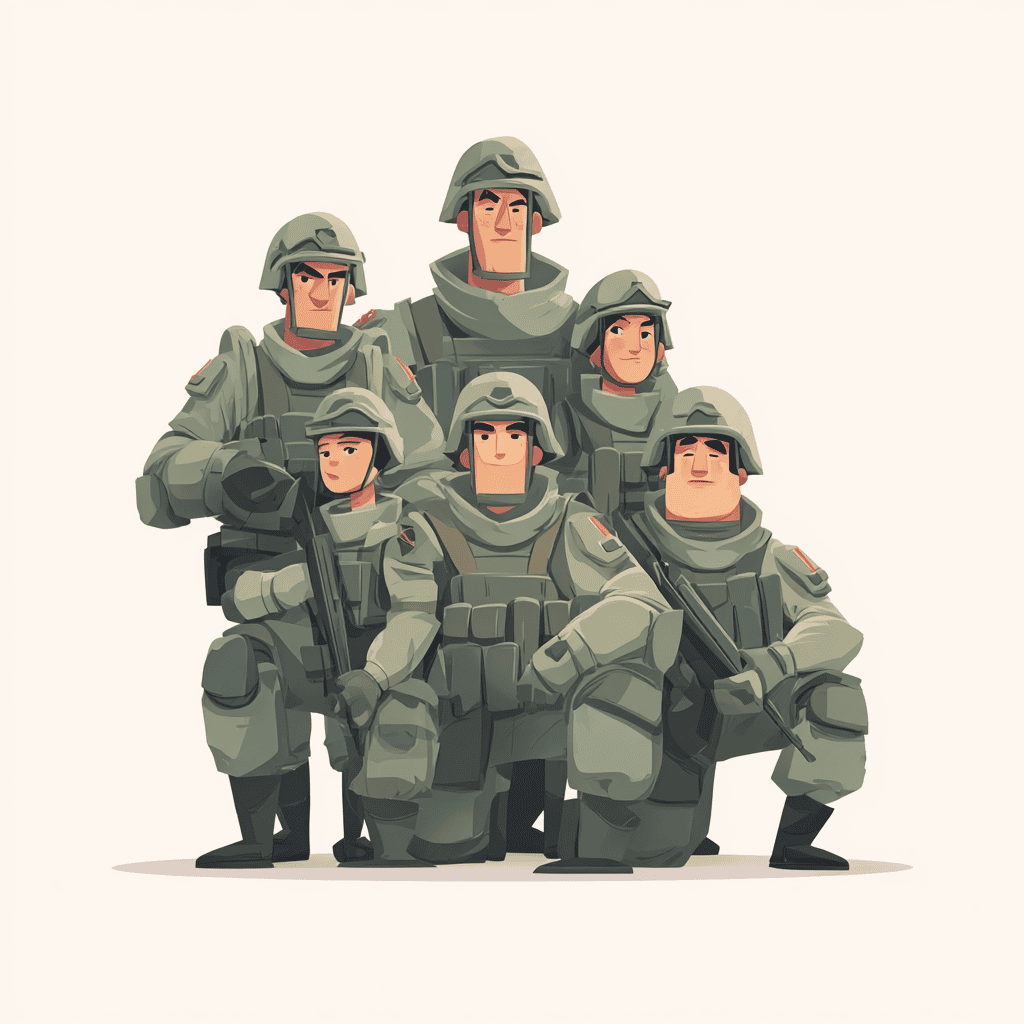
Unlike active-duty military personnel who serve full-time, most Guard members are “traditional” Guard members who train one weekend per month and two weeks per year during normal circumstances. These citizen-soldiers maintain civilian careers as teachers, police officers, engineers, medical professionals, and countless other occupations, bringing valuable civilian skills to their military service.
This part-time service model creates a force deeply embedded in local communities. Guard members live where they serve, understanding local geography, culture, and needs in ways that external forces cannot. When disasters strike, they’re not just helping anonymous victims—they’re protecting their own neighbors, coworkers, and communities.
The Guard also includes full-time personnel: Active Guard Reserve (AGR) members who handle day-to-day administration and training, and military technicians who maintain equipment and facilities. This blend of part-time and full-time personnel ensures units remain ready while controlling costs.
Historical Evolution: From Colonial Militias to Modern Force
The National Guard traces its lineage to 1636 when the Massachusetts Bay Colony organized militia regiments for community defense—making it older than the United States itself. These colonial militias evolved through the Revolutionary War, where citizen-soldiers proved they could stand against professional armies, establishing a tradition of civilian military service that continues today.
The Militia Act of 1903, also known as the Dick Act, formalized the National Guard’s modern structure, establishing federal funding and standards while maintaining state control. World War I saw the first large-scale federalization of Guard units, with the 42nd “Rainbow” Division and other Guard formations fighting in France.
The National Security Act of 1947 created the Air National Guard as a separate reserve component of the newly independent Air Force. The Total Force Policy of the 1970s integrated Guard and Reserve forces more fully into national defense planning, ensuring that America couldn’t go to war without calling up citizen-soldiers—a deliberate check on military adventurism.
State Emergency Response: The Guard’s Primary Mission
Natural Disaster Operations
Natural disasters represent the National Guard’s most visible and frequent state mission. When catastrophe strikes, governors can activate Guard units within hours, providing capabilities that overwhelmed civilian agencies desperately need.
Hurricane Response Operations
Hurricane response showcases the Guard’s full spectrum of capabilities. Before storms make landfall, Guard units pre-position personnel and equipment, evacuate vulnerable populations, and prepare emergency shelters. The Louisiana National Guard’s response to Hurricane Katrina involved over 14,000 personnel conducting search and rescue operations, many using their own boats when military equipment proved insufficient for navigating flooded neighborhoods.
During Hurricane Harvey in 2017, the Texas National Guard deployed over 12,000 members who rescued more than 8,500 people and provided 3.5 million meals. Guard aviation units, flying helicopters and cargo aircraft, become lifelines for communities cut off by flooding. Ground units clear debris, restore power, and distribute emergency supplies from strategically positioned Points of Distribution (PODs).
Wildfire Fighting Support
Western states increasingly rely on National Guard support during wildfire season. While Guard members don’t typically fight fires directly—that remains the domain of professional firefighters—they provide crucial support functions. California National Guard helicopters equipped with water buckets can drop thousands of gallons on active fires, while ground troops assist with evacuations, traffic control, and security for evacuated areas.
The Guard’s Modular Airborne Fire Fighting System (MAFFS) converts military cargo aircraft into aerial tankers capable of dropping 3,000 gallons of fire retardant in seconds. During the 2020 California wildfire season, Air National Guard units flew hundreds of MAFFS missions, helping contain fires that burned over 4 million acres.
Flood and Severe Weather Response
Flooding requires different Guard capabilities: high-water vehicles for rescues, engineers to reinforce levees, and logistics units to manage relief supplies. During the 2019 Missouri River flooding, Iowa and Nebraska Guard units filled over 2 million sandbags and evacuated hundreds of residents from threatened areas.
Winter storms bring unique challenges. Guard units clear roads, deliver emergency supplies to stranded residents, and provide generators to critical facilities. The Massachusetts National Guard’s response to the 2015 Boston snowstorms involved over 500 soldiers operating specialized snow removal equipment and assisting stranded motorists on highways transformed into parking lots.
Public Safety and Civil Support Operations
Beyond natural disasters, governors activate the National Guard for various public safety missions that require military capabilities but remain fundamentally civilian in nature.
Civil Disturbance Response
The Guard’s role in civil disturbances remains one of its most controversial yet necessary functions. Unlike federal troops restricted by the Posse Comitatus Act from domestic law enforcement, National Guard forces operating under state authority can support police while maintaining military discipline and rules of engagement focused on de-escalation.
The 1992 Los Angeles riots saw 10,000 California National Guard troops deployed to restore order after police officers’ acquittal in the Rodney King beating sparked widespread violence. Guard members protected firefighters, secured critical infrastructure, and helped restore calm through visible presence rather than aggressive action.
More recently, the nationwide protests following George Floyd’s death in 2020 resulted in over 96,000 National Guard members activated across 34 states and D.C.—the largest domestic deployment since World War II. These deployments highlighted both the Guard’s importance in crisis response and the delicate balance required when military forces support civilian authorities.
Major Event Security
Large public events increasingly require National Guard security support. Super Bowls, presidential inaugurations, and other high-profile gatherings see Guard members providing everything from aerial surveillance to explosive detection. The 2021 Presidential Inauguration involved 26,000 Guard troops providing security in Washington D.C., more than the combined U.S. military presence in Iraq, Afghanistan, and Syria at the time.
Guard units bring unique capabilities to event security: military communications systems that don’t rely on potentially overwhelmed cellular networks, Chemical, Biological, Radiological, and Nuclear (CBRN) response teams, and rapid reaction forces positioned to respond to emerging threats.
Pandemic Response: The COVID-19 Case Study
The COVID-19 pandemic created an unprecedented peacetime mobilization of National Guard forces, demonstrating their adaptability to non-traditional threats. At the peak of pandemic response, over 50,000 Guard members served on COVID-19 missions nationwide, making it one of the largest sustained domestic deployments in Guard history.
Medical Support Operations
Guard medical units established field hospitals, augmented civilian healthcare facilities, and provided direct patient care. The USNS Comfort and USNS Mercy hospital ships received Guard medical personnel to expand capacity. In hard-hit states like New York, Guard members worked 12-hour shifts in overwhelmed hospitals, serving as nurses, respiratory therapists, and support staff.
Beyond direct medical care, Guard units operated testing sites that conducted millions of COVID tests. Mobile testing teams brought capabilities to underserved rural and urban communities where residents faced barriers to accessing traditional healthcare. The Tennessee National Guard, for instance, operated over 50 testing sites that processed more than 500,000 tests.
Logistics and Distribution
The pandemic stressed America’s supply chains, and Guard logistics units helped fill gaps. Members operated warehouses storing Personal Protective Equipment (PPE), delivered supplies to healthcare facilities, and managed distribution networks for everything from ventilators to vaccines.
Food insecurity exploded during lockdowns, with millions of Americans visiting food banks for the first time. Guard members packed and distributed millions of meals, with some units processing over 100,000 pounds of food daily. The Feeding America network partnered with Guard units nationwide, leveraging military logistics expertise to expand food distribution capacity by up to 400% in some regions.
Vaccination Operations
Once vaccines became available, the Guard played a central role in America’s vaccination campaign. Guard members administered shots, managed vaccination sites, and provided mobile vaccination units reaching rural and underserved communities. By the end of the emergency, Guard members had administered over 20 million vaccine doses—approximately 5% of all vaccinations nationwide.
Federal Missions: From Combat to Peacekeeping
Overseas Combat Deployments
Since 9/11, the National Guard has transformed from a strategic reserve to an operational force regularly deploying overseas. Nearly one million Guard members have deployed to Iraq and Afghanistan, with some units completing multiple combat tours. This represents a fundamental shift from the Guard’s Cold War role as a last-resort force to an integral component of American military operations.
The Post-9/11 Transformation
The September 11 attacks triggered immediate Guard mobilizations. Within hours, fighter jets from Air National Guard units established combat air patrols over major American cities—a mission that continued for years. The New York National Guard’s 69th Infantry Regiment, which lost members in the World Trade Center collapse, later deployed to Iraq, exemplifying the Guard’s dual tragedy and duty.
Operation Iraqi Freedom and Operation Enduring Freedom saw entire Guard combat brigades deploying for 12-15 month tours, conducting the same missions as active-duty units: combat patrols, base security, reconstruction, and training local forces. The 42nd Infantry Division’s 2005 deployment to Iraq marked the first time since World War II that an entire Guard division headquarters deployed to combat.
These deployments strained the citizen-soldier model. Employers struggled with extended absences of key employees, families endured multiple deployments, and some Guard members spent more time on active duty than in civilian life. Yet the Guard met every mission, proving that properly trained and equipped citizen-soldiers could perform any military task.
Current Global Missions
Today’s National Guard maintains persistent overseas presence through regular rotations. Guard units provide security for American embassies, conduct training missions with allied nations, and maintain readiness for rapid deployment. The Kosovo Force (KFOR) mission regularly includes Guard units maintaining peace in the Balkans decades after the initial intervention.
Special Forces units from the Army National Guard—the 19th and 20th Special Forces Groups—conduct missions worldwide, leveraging Guard members’ civilian expertise in languages, cultures, and technical fields. These elite units demonstrate that part-time service doesn’t mean part-time commitment to excellence.
Homeland Security and Defense
Beyond traditional state emergencies, the National Guard provides critical homeland security capabilities that bridge the gap between law enforcement and military operations.
Border Security Operations
Several states maintain persistent National Guard presence along the Mexican border, supporting Customs and Border Protection through surveillance, logistics, and infrastructure maintenance. Operation Guardian Support has deployed thousands of Guard members to the southwest border since 2018, providing aerial reconnaissance, vehicle maintenance, and administrative support that frees Border Patrol agents for law enforcement duties.
These missions remain controversial, with debates about militarizing border enforcement and the proper use of Guard resources. Supporters argue Guard support enhances border security without expanding federal law enforcement, while critics worry about mission creep and the impact on Guard readiness for other emergencies.
Cybersecurity and Critical Infrastructure Protection
The digital age brought new threats requiring new Guard capabilities. Every state now has National Guard Cyber Protection Teams trained to defend critical infrastructure from cyber attacks. These units leverage Guard members’ civilian expertise—many work in technology, telecommunications, or cybersecurity in their civilian careers.
During the 2020 elections, Guard cyber teams supported election security in multiple states, monitoring for interference and providing technical assistance to election officials. The Cybersecurity and Infrastructure Security Agency (CISA) regularly partners with Guard units to assess and strengthen state and local government cybersecurity.
Guard units also protect physical critical infrastructure. Following 9/11, Guard members secured nuclear power plants, water treatment facilities, and other potential targets. Today’s Critical Infrastructure Protection missions focus on assessing vulnerabilities and developing response plans rather than maintaining permanent security presence.
Counter-Drug Operations
The National Guard operates extensive counter-drug programs supporting law enforcement agencies. Guard personnel cannot directly enforce drug laws but provide crucial support: aerial surveillance, analytical support, and ground reconnaissance. The Guard’s Counter Drug Task Forces have supported thousands of law enforcement operations resulting in billions of dollars in drug seizures.
These operations often leverage military equipment for civilian benefit. Helicopters with infrared sensors designed for combat reconnaissance help locate marijuana growing operations and methamphetamine labs. Intelligence analysts trained for battlefield assessment apply their skills to mapping drug trafficking networks.
Training and Readiness: Maintaining Dual Capabilities
Regular Training Requirements
Maintaining readiness for both state and federal missions requires extensive training beyond the traditional “one weekend a month, two weeks a year” commitment. Annual training often extends to three or four weeks, with additional schools and exercises throughout the year.
Combat units conduct monthly battle drills, weapons qualification, and tactical training. Support units practice their specialties: medics maintain clinical skills, engineers operate heavy equipment, and logistics units rehearse supply distribution. Air National Guard pilots must maintain the same flight hours and proficiency as active-duty counterparts.
The Combat Training Centers at Fort Irwin, California, and Fort Polk, Louisiana, provide realistic combat training with opposing forces, civilian role-players, and scenarios based on current threats. Guard units regularly rotate through these centers, experiencing conditions as close to actual combat as safely possible.
State Partnership Program
The State Partnership Program (SPP) pairs National Guard units with foreign militaries for long-term cooperation and training. These partnerships, begun after the Cold War to assist newly democratic Eastern European nations, now span 88 partnerships worldwide.
Minnesota’s partnership with Croatia, established in 1996, exemplifies the program’s evolution. Initial exchanges focused on democratic civil-military relations and NATO integration. Today, Minnesota and Croatian forces train together for peacekeeping missions, share expertise in emergency management, and conduct cyber defense exercises.
These partnerships provide Guard members international experience without deployment, strengthen American alliances, and create military-to-military relationships that endure political changes. During natural disasters, partner nations often share lessons learned and sometimes provide direct assistance.
Emergency Management Training
State emergency response requires different skills than combat operations. The Emergency Management Institute at the National Emergency Training Center provides specialized courses in incident command, disaster logistics, and interagency coordination. Guard officers attend the same training as civilian emergency managers, ensuring common procedures and terminology.
Realistic disaster exercises test Guard readiness for state missions. Vigilant Guard exercises simulate catastrophic earthquakes, hurricanes, or terrorist attacks, requiring Guard units to coordinate with civilian agencies, establish emergency communications, and manage large-scale relief operations. These exercises reveal gaps in planning and communication that can be addressed before actual disasters.
Organization and Resources: The Infrastructure of Readiness
Unit Types and Capabilities
The National Guard’s diverse unit types provide capabilities for virtually any mission. Infantry and armor units form the combat backbone, while aviation units operate everything from medical evacuation helicopters to cargo aircraft. Engineer units can build bridges, clear debris, or construct emergency facilities. Military Police units provide security and law enforcement support.
Specialized units address unique threats. Weapons of Mass Destruction Civil Support Teams (WMD-CST) can identify chemical, biological, or radiological hazards and advise civilian authorities on response. CBRN Enhanced Response Force Packages (CERFPs) provide mass decontamination and medical treatment following WMD incidents.
The Air National Guard operates sophisticated aircraft including F-35 fighters, KC-135 tankers, and C-130 cargo planes. These units maintain alert status for homeland defense, with fighters ready to launch within minutes to intercept potential threats. Transport units provide strategic airlift for both military operations and disaster relief.
Equipment and Modernization
The National Guard operates much of the same equipment as active-duty forces, though modernization often lags. The Army National Guard fields M1 Abrams tanks, Bradley Fighting Vehicles, and Apache helicopters. However, Guard units frequently receive equipment after active units upgrade, creating capability gaps that affect readiness.
Recent initiatives aim to better equip the Guard for state missions. The National Guard Bureau’s Dual Use equipment programs prioritize items valuable for both combat and domestic operations: trucks, helicopters, communications systems, and engineering equipment. States can also purchase equipment specifically for emergency response using federal grants and state funds.
The challenge lies in balancing combat readiness with state mission requirements. A tank has limited utility in flood response, but Guard armor units need tanks to maintain combat readiness. This tension drives ongoing debates about Guard funding priorities and force structure.
Funding and Budget Challenges
National Guard funding comes from multiple sources, creating complex budget dynamics. Federal funds cover most training, equipment, and maintenance costs for federal missions. States contribute varying amounts for state-specific requirements, facilities, and emergency activations.
The Guard operates on approximately 12% of the Army’s budget while providing 39% of its operational force—a cost-effective model that saves billions annually. However, this efficiency comes with trade-offs: older equipment, limited training opportunities, and challenges maintaining readiness across dual missions.
State active duty funding varies dramatically. Wealthy states can afford extensive Guard activations for emergencies, while poorer states struggle to fund even critical missions. Federal emergency declarations unlock federal funding for Guard operations, but governors must often activate units immediately and hope for later reimbursement.
Legal Framework: The Complex Rules Governing Guard Employment
The Posse Comitatus Act and State Authority
The Posse Comitatus Act of 1878 prohibits federal military forces from conducting law enforcement operations within the United States, but National Guard forces operating under state authority remain exempt. This distinction enables governors to use Guard units for law enforcement support while federal troops cannot perform similar missions.
This legal framework creates three distinct Guard statuses: State Active Duty (SAD) under governor control with state funding, Title 32 federal funding with governor control, and Title 10 federal activation under presidential control. Each status carries different authorities, limitations, and funding sources.
Understanding these distinctions matters during complex operations. During Hurricane Katrina, some Guard units operated under state authority while others were federalized, creating command and coordination challenges. Dual-status commanders—officers authorized to command both state and federal forces—now help bridge these divides during major operations.
Interstate Cooperation and EMAC
The Emergency Management Assistance Compact (EMAC) enables states to share National Guard resources during emergencies. Ratified by Congress and all 50 states, EMAC provides legal framework for interstate Guard deployments while maintaining clear command relationships and liability coverage.
During Hurricane Sandy, Guard units from across the nation deployed to affected states through EMAC. Ohio Guard engineers helped restore power in New York, while North Carolina Guard helicopters conducted rescues in New Jersey. These interstate deployments demonstrate the National Guard’s truly national character despite state-level organization.
EMAC activation requires gubernatorial approval from both sending and receiving states, preventing federal overreach while enabling rapid assistance. Receiving states reimburse sending states for costs, though federal emergency declarations typically provide ultimate funding.
Notable National Guard Operations: Historical Case Studies
Hurricane Katrina: Lessons in Coordination
Hurricane Katrina remains the National Guard’s largest natural disaster response, with over 50,000 Guard members from all 54 states and territories participating in operations. The response revealed both Guard capabilities and systemic failures that drove significant reforms.
Louisiana and Mississippi National Guards, despite suffering personal losses from the storm, immediately began rescue operations. The Louisiana Guard’s Task Force Pelican rescued over 23,000 people, often using civilian boats when military equipment proved inadequate for urban flooding. Mississippi Guard units secured the devastated coastline and distributed millions of pounds of emergency supplies.
However, coordination failures between state and federal authorities, inadequate communications systems, and delayed resource deployment hampered initial response. The lack of dual-status command arrangements complicated coordination between state-controlled Guard units and federal active-duty forces. These lessons drove development of standardized response procedures and improved interagency coordination mechanisms still used today.
Los Angeles Riots: Restoring Order
The 1992 Los Angeles riots following the Rodney King verdict required the largest Guard mobilization for civil disturbance since the 1960s. Within hours of the violence beginning, California Governor Pete Wilson activated Guard units, eventually deploying 10,000 troops to Los Angeles County.
Guard members faced complex challenges: protecting firefighters combating over 3,000 structure fires, securing businesses from looting, and maintaining order without escalating violence. Rules of engagement emphasized minimum force, with most Guard members patrolling without ammunition initially. The visible presence of disciplined military units helped restore calm while avoiding the aggressive tactics that sparked the initial unrest.
The deployment highlighted the Guard’s value in civil disturbances: military discipline and training combined with connection to local communities. Many deployed Guard members lived in affected neighborhoods, giving them personal stake in restoring peace while understanding community dynamics.
9/11 and Operation Noble Eagle
The September 11 attacks triggered unprecedented National Guard homeland defense operations. Within hours, Air National Guard F-15s and F-16s established combat air patrols over major cities—the first armed military aircraft defending American airspace since World War II.
Ground units secured airports, bridges, nuclear plants, and other critical infrastructure. The New York National Guard established perimeter security at Ground Zero, supported search and recovery operations, and provided logistical support for emergency responders. This immediate response demonstrated the Guard’s unique ability to provide military capabilities for homeland defense without declaring martial law.
Operation Noble Eagle, the ongoing homeland defense mission begun after 9/11, has involved hundreds of thousands of Guard members. Air Guard units maintain alert fighters ready to intercept threats, while ground units developed rapid response capabilities for terrorist incidents. These missions fundamentally changed the Guard’s role from strategic reserve to actively engaged homeland defense force.
The Future of the National Guard
Evolving Threats and Missions
Climate change drives increasing demand for National Guard emergency response. More frequent and severe natural disasters strain Guard resources, with units responding to multiple emergencies simultaneously. The 2020 combination of pandemic response, wildfire suppression, and civil disturbance response stretched Guard capabilities near breaking point.
Cyber threats represent another growth area for Guard missions. State and local governments increasingly request Guard cyber assistance as ransomware attacks threaten critical services. The Guard’s unique authorities allowing support to civilian agencies, combined with members’ civilian technology expertise, position it as key player in national cyber defense.
Space operations mark the newest frontier for National Guard missions. Air National Guard units already operate satellite communications and missile warning systems. As the Space Force matures, Space National Guard units may provide state governors with space-based capabilities for disaster response and communications.
Recruitment and Retention Challenges
Maintaining an all-volunteer National Guard faces increasing challenges. Extended deployments since 9/11 strained the citizen-soldier model, with some employers reluctant to hire Guard members facing potential year-long absences. Family pressures from multiple deployments led many experienced members to leave service.
The COVID-19 pandemic created additional stress, with extended state activations keeping Guard members from civilian employment for months. Some members lost civilian jobs or businesses during pandemic deployments, highlighting tensions between Guard service and civilian careers.
Recruiting younger Americans proves increasingly difficult as fewer have military connections and many cannot meet fitness or education standards. The Guard competes with active-duty military, civilian employers, and higher education for the same limited pool of qualified candidates.
Modernization and Capability Development
The National Guard’s equipment modernization needs compete with active component priorities and constrained budgets. While Guard units eventually receive modern equipment, the lag affects readiness and capability. Fifth-generation fighters, advanced helicopters, and modern communications systems require billions in investment.
Training infrastructure also needs modernization. Many Guard armories date from the 1950s and lack facilities for modern training requirements. Virtual training systems could enable distributed training without lengthy travel to centralized facilities, but require significant technology investment.
The balance between federal and state capabilities remains contentious. Some argue the Guard should focus primarily on combat readiness, with emergency response as secondary mission. Others advocate for increased emergency management capabilities even if it reduces combat readiness. This fundamental tension will shape future Guard development.
Conclusion: Role of State National Guards in Emergencies
The National Guard represents a unique American institution that bridges the civilian-military divide while providing essential capabilities for both homeland security and national defense. From its colonial militia roots to its current role as operational reserve, the Guard has repeatedly proven its value in crisis and conflict.
The dual state-federal mission that seems complex and sometimes contradictory actually provides remarkable flexibility. Governors can rapidly deploy military capabilities for emergencies without federal bureaucracy or declaring martial law. The president can access trained military forces without maintaining larger active-duty military. Communities benefit from citizen-soldiers who understand local needs while bringing military resources and discipline.
Recent years have demonstrated both the Guard’s capabilities and its limits. The COVID-19 pandemic, nationwide civil unrest, and increasing natural disasters stretched Guard forces while proving their essential role in American crisis response. Overseas deployments in Iraq and Afghanistan showed citizen-soldiers could perform any military mission while maintaining their civilian connections.
Yet challenges remain. Balancing state and federal missions grows more difficult as both demands increase. Maintaining readiness for combat while preparing for domestic emergencies strains resources and training time. Recruiting and retaining citizen-soldiers becomes harder as military service becomes less common and deployments more frequent.
The National Guard’s future depends on recognizing its unique value while providing resources necessary for dual missions. This means modern equipment useful for both combat and emergency response, training systems that accommodate citizen-soldiers’ civilian commitments, and policies that protect Guard members’ civilian careers during extended activations.
State National Guards will continue evolving as threats change and technology advances. Cyber operations, space capabilities, and unmanned systems will join traditional ground and air forces. Climate change will drive more frequent and severe emergency responses. International partnerships will expand as global challenges require cooperative solutions.
Through all these changes, the National Guard’s fundamental character—citizen-soldiers serving their communities and nation—will endure. The tradition of civilians taking up arms in times of crisis, then returning to peaceful pursuits, embodies American ideals of civic duty and democratic governance. Whether responding to floods in Iowa, fighting in Afghanistan, or distributing vaccines during a pandemic, Guard members demonstrate that ordinary citizens can accomplish extraordinary things when their communities and country need them.
The National Guard’s story is ultimately about service—neighbors helping neighbors, citizens defending democracy, and part-time soldiers achieving full-time excellence. As long as America faces threats foreign and domestic, the National Guard will stand ready, proving that the citizen-soldier tradition begun nearly 400 years ago remains as vital today as ever. Understanding and supporting this unique institution ensures that when the next crisis arrives—and it surely will—the National Guard will be ready to answer the call, just as it has throughout American history.
Additional Resources
For more information about the National Guard’s structure and current operations, visit the National Guard Bureau’s official website, which provides detailed information about both Army and Air National Guard units, current deployments, and how to support Guard families. The National Guard Association of the United States advocates for Guard members and provides policy analysis on issues affecting the force.