Table of Contents
What Happens During the Presidential Inauguration? A Complete Guide to America’s Transfer of Power
The Sacred Ritual of American Democracy
Every four years, the world watches as the United States conducts one of democracy’s most powerful rituals: the presidential inauguration. This carefully orchestrated day combines constitutional requirements with centuries of tradition, transforming a political victor into the leader of the free world. More than mere pageantry, the inauguration represents the peaceful transfer of power that has occurred uninterrupted since George Washington took the first oath in 1789—a remarkable achievement that many democracies have failed to match.
The presidential inauguration ceremony serves multiple purposes: fulfilling constitutional mandates, symbolizing democratic continuity, unifying a often-divided nation, and presenting America’s face to the world. From the precise noon swearing-in to the evening’s celebratory balls, every element carries meaning refined over 59 inaugurations. Understanding what happens on inauguration day reveals not just procedural details but the deeper values and vulnerabilities of American democracy.
Constitutional Requirements vs. Traditional Elements
The Constitutional Mandate
The Constitution provides minimal guidance for inaugurations, requiring only the oath:
Article II, Section 1, Clause 8: “Before he enter on the Execution of his Office, he shall take the following Oath or Affirmation:—’I do solemnly swear (or affirm) that I will faithfully execute the Office of President of the United States, and will to the best of my Ability, preserve, protect and defend the Constitution of the United States.'”
Constitutional specifics:
- Oath must be taken before assuming office
- 35-word oath text is prescribed exactly
- “Swear” or “affirm” option respects religious diversity
- No location specified
- No ceremony required
- No Bible mentioned
The 20th Amendment Timeline
Originally, inaugurations occurred on March 4, allowing time for vote counting and travel. The 20th Amendment (1933) moved the date:
- January 20: Presidential inauguration at noon
- January 3: New Congress convenes
- Reduces “lame duck” period
- If January 20 falls on Sunday, public ceremony often moves to January 21
Evolution of Traditions
How inauguration traditions developed:
1789-1840s: Establishing Precedents
- Washington adds “So help me God” (disputed)
- Jefferson walks to Capitol (democratic simplicity)
- Jackson opens White House to public
- Harrison gives longest address (8,445 words, 2 hours)
1850s-1900: Growing Grandeur
- First inauguration photographed (Buchanan, 1857)
- Lincoln includes African Americans in parade (1865)
- First telephone at inauguration (McKinley, 1897)
- Reviewing stands constructed
1901-1960: Modern Elements
- First automobile in parade (Harding, 1921)
- First radio broadcast (Coolidge, 1925)
- First television broadcast (Truman, 1949)
- First poet participates (Kennedy, 1961)
1961-Present: Security and Spectacle
- Bulletproof glass introduced after Kennedy
- Multiple indoor backup locations prepared
- Extensive security screening
- Global television audience
- Social media integration
The Complete Inauguration Day Timeline
Pre-Dawn Preparations (4:00 AM – 8:00 AM)
Security operations:
- Secret Service final sweeps
- Sniper positions established
- Bomb-detecting dogs deployed
- Air space restrictions activated
- Emergency response teams stationed
- Counter-assault teams positioned
Media setup:
- Camera positions activated
- Satellite trucks operational
- International broadcast feeds tested
- Social media teams mobilized
- Press credentials verified
Morning Traditions (8:00 AM – 10:30 AM)
White House Tea (8:30 AM):
- Outgoing president hosts president-elect
- Private meeting between families
- Final briefings possible
- Gift exchange tradition
- Photo opportunity
- Symbol of peaceful transition
Worship Service (9:00 AM):
- Usually at St. John’s Episcopal Church
- Interfaith participation common
- Private family moment
- Optional but traditional since FDR
- Security challenges for public churches
Congressional Coffee (10:00 AM):
- Joint Congressional Committee hosts
- Bipartisan gathering
- Final preparations
- VIP assembly point
The Procession (10:30 AM – 11:30 AM)
Departure from White House:
- President and president-elect ride together
- Symbolizes continuity
- Route down Pennsylvania Avenue
- Heavy security presence
- Media coverage intense
Historical exceptions:
- 1801: Adams leaves early, avoiding Jefferson
- 1869: Johnson boycotts Grant inauguration
- 2021: Trump breaks tradition, doesn’t attend Biden’s
Arrival at Capitol:
- Military honors rendered
- Congressional leadership greets
- Platform assembly begins
- VIP seating arranged
- Public crowds gathering
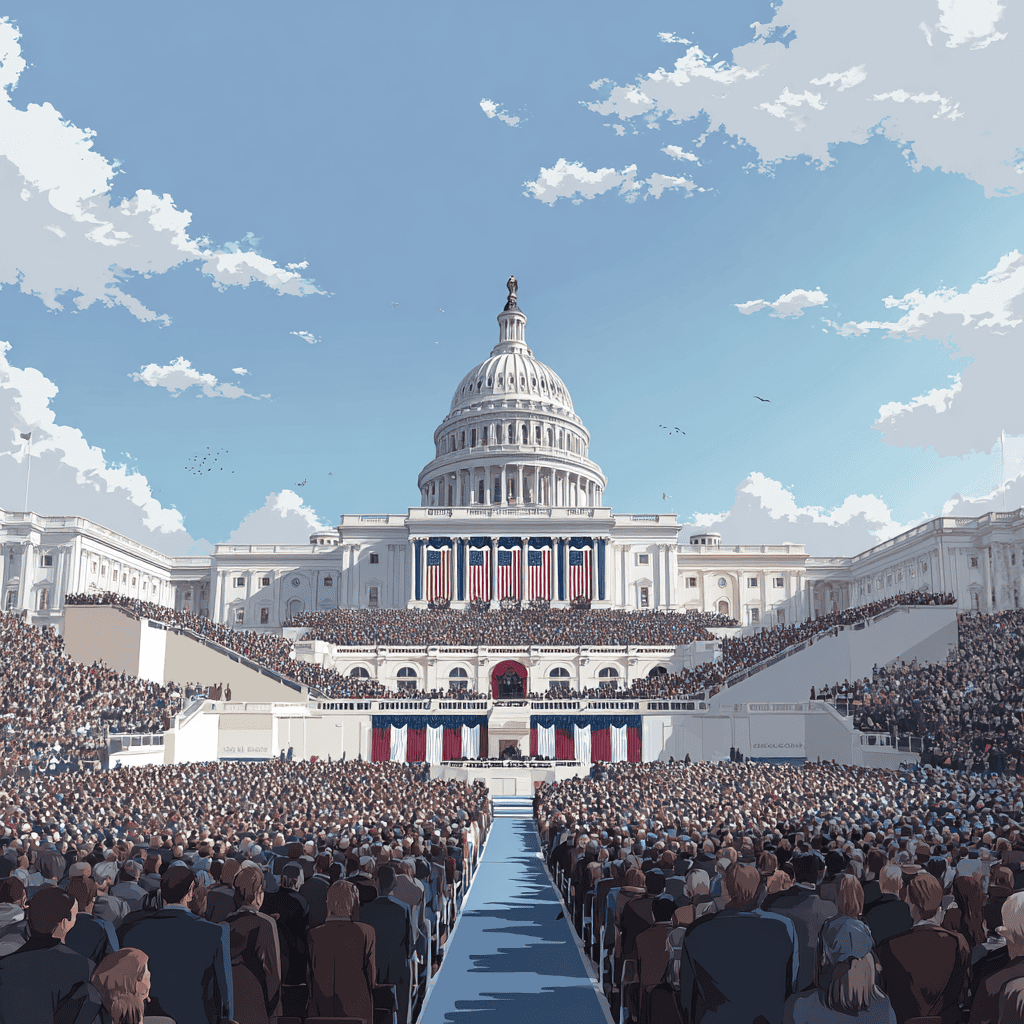
The Swearing-In Ceremony (11:30 AM – 12:30 PM)
Order of events:
11:30 AM – Opening Ceremonies:
- Marine Band performs
- Distinguished guests seated
- Former presidents announced
- Supreme Court justices arrive
- Diplomatic corps seated
11:45 AM – Vice Presidential Oath:
- Associate Justice typically presides
- Senate President administers historically
- Shorter oath (same as Congress)
- Family Bible often used
- Spouse holds Bible traditionally
12:00 PM – Presidential Oath:
- Chief Justice administers
- Hand on Bible (traditional, not required)
- 35 words recited
- “So help me God” added (optional)
- Becomes president at noon regardless
12:02 PM – Inaugural Address:
- First act as president
- Average length: 2,300 words (20 minutes)
- Shortest: Washington’s second (135 words)
- Longest: Harrison’s (8,445 words)
- Sets administration tone
Post-Ceremony Events (12:30 PM – 4:00 PM)
Departure Ceremony (12:30 PM):
- Former president departs
- Military helicopter (Marine One) waiting
- Staff farewell
- Final honors rendered
- Emotional moment often
Signing Ceremony (12:45 PM):
- President’s Room in Capitol
- First official acts
- Nominations signed
- Executive orders possible
- Proclamations issued
Congressional Luncheon (1:00 PM):
- Statuary Hall traditionally
- 200 guests approximately
- Bipartisan toasts
- Regional menu often
- Gifts presented
Inaugural Parade (3:00 PM):
- 1.5 mile route to White House
- Presidential reviewing stand
- Military units march
- State representations
- High school bands
- Cultural groups
- 2-3 hours typically
Evening Celebrations (7:00 PM – Midnight)
Inaugural Balls:
- Multiple venues typically
- Official vs. unofficial balls
- President and First Lady attend several
- First dance tradition
- Brief remarks expected
- Thousands attend
- Formal attire required
Historical ball statistics:
- Washington: 1 ball (1789)
- Lincoln: 1 ball (1865)
- Eisenhower: 4 balls (1953)
- Clinton: 14 balls (1997)
- Obama: 10 balls (2009)
- Trump: 3 balls (2017)
- Biden: Virtual events (2021, COVID)
The Key Players and Their Roles
Constitutional Officers
Chief Justice:
- Administers presidential oath
- Not constitutionally required
- Tradition since Washington
- Brings Court’s authority
- Occasional mistakes (Obama 2009 redo)
President of the Senate:
- Often administers VP oath
- Certifies electoral votes
- Presides over indoor ceremony if needed
Organizational Leadership
Joint Congressional Committee on Inaugural Ceremonies:
- Plans Capitol ceremonies
- Manages platform construction
- Coordinates security
- Selects performers
- Approves guest lists
- Budget: $1.5-2 million
Presidential Inaugural Committee:
- Appointed by president-elect
- Plans parade and balls
- Raises private funds
- Manages tickets
- Coordinates with agencies
- Budget: $30-100 million typically
Security Forces
Secret Service:
- Lead agency for security
- Year-long planning
- Threat assessment
- Route security
- Emergency evacuation
- Counter-sniper teams
Supporting agencies (20,000+ personnel):
- FBI (intelligence)
- Capitol Police (grounds)
- Park Police (monuments)
- Military District of Washington (ceremonies)
- National Guard (crowd control)
- TSA (transportation)
Behind the Scenes: The Massive Logistics
Security Operations
Unprecedented security measures:
Physical security:
- 30-square-mile restricted zone
- 100+ blocks closed
- 12-foot fence perimeter
- Magnetometers throughout
- Chemical detection systems
- Radiation monitors
Aerial security:
- 30-mile no-fly zone
- Fighter jets on patrol
- Helicopter surveillance
- Drone detection systems
- Anti-aircraft missiles ready
Cyber security:
- Communication encryption
- Jamming capabilities
- Social media monitoring
- Dark web surveillance
Crowd Management
Public attendance logistics:
- 200,000-1.8 million historically
- Ticketed vs. non-ticketed areas
- 1,600 portable toilets
- Medical stations every block
- Jumbotrons for viewing
- Metro system expanded service
Media Operations
Global broadcast coordination:
- 5,000+ journalists credentialed
- 100+ camera positions
- Satellite trucks stationed
- International feed centers
- Social media command center
- Live streaming infrastructure
Inaugural Addresses: Words That Define Presidencies
Historical Themes
Common inaugural themes:
- Unity and healing (43% of speeches)
- American exceptionalism (38%)
- Challenges ahead (35%)
- Historical moments (30%)
- Global leadership (28%)
- Economic vision (25%)
- Call to service (20%)
Memorable Lines
Quotes that shaped America:
Washington (1789): “The preservation of the sacred fire of liberty…is justly considered… deeply, …finally, staked on the experiment entrusted to the hands of the American people.”
Lincoln (1865): “With malice toward none, with charity for all…”
FDR (1933): “The only thing we have to fear is fear itself.”
Kennedy (1961): “Ask not what your country can do for you—ask what you can do for your country.”
Reagan (1981): “Government is not the solution to our problem; government is the problem.”
Obama (2009): “Starting today, we must pick ourselves up, dust ourselves off, and begin again the work of remaking America.”
Modern Speechwriting Process
Creating an inaugural address:
- Months of preparation
- Historical research
- Multiple drafts (20-30 typical)
- Focus groups sometimes
- Fact-checking intensive
- Practice sessions
- Teleprompter backup
- Paper copy always ready
Special Circumstances and Contingencies
Unexpected Successions
Nine vice presidents became president mid-term:
- Tyler (1841): First VP succession, no ceremony
- Johnson (1865): Sworn in at hotel, Lincoln assassinated
- Arthur (1881): Oath at home, 2 AM
- T. Roosevelt (1901): Sworn in at private home
- Coolidge (1923): Father administered oath
- Truman (1945): Quick ceremony, WWII ongoing
- L. Johnson (1963): Sworn on Air Force One
- Ford (1974): East Room ceremony, Nixon resigned
- Biden potential scenario planned constantly
Weather Contingencies
Extreme weather impacts:
- 1841: Harrison dies from pneumonia after cold, wet ceremony
- 1909: Taft moves indoors (blizzard)
- 1985: Reagan moves indoors (-20°F windchill)
- Backup locations always prepared
- Indoor options: Capitol Rotunda, House Chamber
Security Incidents
Historical security concerns:
- 1829: Jackson’s rowdy reception damages White House
- 1865: Lincoln under threat, heavy security
- 1901: McKinley assassinated months after inauguration
- 1933: FDR assassination attempt weeks after
- 1961: Kennedy first with bulletproof glass
- 2009: Obama highest threat level recorded
- 2021: Biden after Capitol attack, 25,000 troops deployed
Global Significance and International Protocols
Diplomatic Attendance
International representation:
- 170+ nations send representatives
- Heads of state rarely attend (security)
- Ambassadors standard attendees
- Special delegations for allies
- Protocol rankings complex
- Gift exchanges common
Global Viewing
International audience:
- 500 million+ viewers globally
- Translated into 60+ languages
- Analysis in every capital
- Market reactions immediate
- Social media global trending
Symbolic Messages
What the world watches for:
- Tone toward allies/adversaries
- Trade policy hints
- Military posture signals
- Climate change positioning
- Democracy promotion emphasis
- Multilateral vs. unilateral approach
Modern Innovations and Changes
Technology Integration
21st century additions:
- YouTube live streaming (2009)
- Twitter integration (2009)
- Instagram stories (2013)
- TikTok content (2021)
- Virtual reality experiences
- Drone footage (restricted)
- 5G broadcasting
COVID-19 Adaptations (2021)
Pandemic modifications:
- Drastically reduced attendance
- Social distancing on platform
- Mask requirements
- Virtual parade elements
- Online celebrations
- No public access
- Testing requirements
Accessibility Improvements
Inclusive innovations:
- ASL interpretation
- Audio description services
- Wheelchair accessible viewing
- Sensory-friendly areas
- Multiple language options
- Braille programs
- Service animal accommodations
The Cost and Economics
Financial Breakdown
Total costs (estimate):
- Security: $100-200 million
- Ceremony: $1.5 million (congressional)
- Parade/balls: $30-50 million (private)
- City services: $20-30 million
- Total: $150-280 million
Funding sources:
- Federal appropriations (security/ceremony)
- Private donations (celebrations)
- Corporate sponsorships (limited)
- Ticket sales (balls)
- Merchandise sales
Economic Impact
Washington D.C. economic boost:
- Hotel bookings: $50-100 million
- Restaurant revenue: $20-30 million
- Transportation: $10-15 million
- Retail sales: $25-40 million
- Total impact: $100-200 million
Cultural and Social Significance
Fashion and Style
Inaugural fashion impact:
- First Lady’s gown enters Smithsonian
- Designer selection scrutinized
- Color choices analyzed
- American designers prioritized
- Sets fashion trends
- Billions in publicity value
Cultural Performances
Artistic participation evolution:
- Classical music (traditional)
- Pop stars (modern)
- Poets (occasional)
- Military bands (constant)
- Youth performers (common)
- Diverse representation (increasing)
Social Media Age
Digital participation:
- Millions of posts
- Memes created instantly
- Fact-checking in real-time
- Global conversations
- Viral moments
- Permanent digital record
Conclusion: Democracy’s Most Visible Day
The presidential inauguration stands as democracy’s most powerful piece of political theater—a carefully choreographed transfer of enormous power that occurs peacefully, publicly, and punctually. Every element, from the constitutionally mandated oath to the evening’s elaborate balls, reinforces fundamental American principles: civilian control, democratic succession, and government by consent of the governed.
What makes the inauguration remarkable isn’t its pageantry but its regularity. Through civil war, world wars, depression, and pandemic, the ceremony has continued uninterrupted since 1789. This consistency transforms what could be a moment of vulnerability—the transfer of supreme executive power—into a demonstration of institutional strength.
The inauguration serves multiple audiences simultaneously. For Americans, it provides closure to electoral battles and opens new chapters of governance. For the world, it signals policy directions and democratic vitality. For history, it marks precise moments when leadership changed hands and new eras began.
Understanding what happens during the presidential inauguration reveals both democracy’s grandeur and fragility. The ceremony’s elaborate security reflects real threats to democratic processes. The peaceful transfer of power, taken for granted by many Americans, remains exceptional globally. The balance between tradition and adaptation shows democracy’s capacity for both continuity and change.
As technology transforms civic participation and security threats evolve, future inaugurations will undoubtedly adapt while maintaining core constitutional requirements. Yet the essential drama—one citizen taking an oath to serve all citizens—will remain. In that moment at noon on January 20th, democracy renews itself through words spoken and witnessed, proving once again that in America, power flows from the people, through the Constitution, to temporary occupants of permanent offices.
The inauguration reminds us that democracy isn’t just about winning elections but about accepting results, transferring power, and beginning again the endless work of self-governance. Every four years, through 35 words and countless traditions, America demonstrates that democracy, however imperfect, endures.
For more information about inaugurations, visit the Joint Congressional Committee on Inaugural Ceremonies or explore the Smithsonian’s inauguration collection.