Table of Contents
Why Is The Government Shutdown in 2025? Complete Guide to the Crisis, Impact, and Path Forward
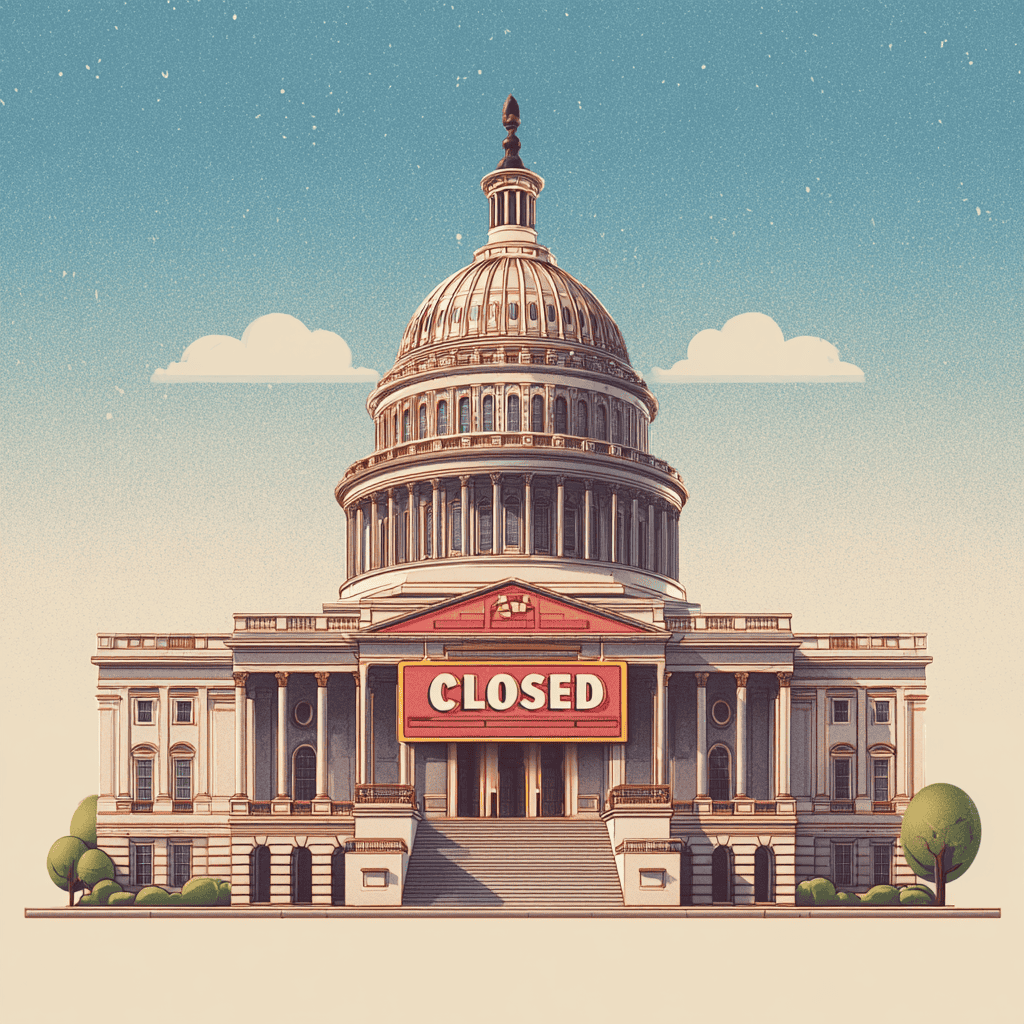
The 2025 federal government shutdown began at 12:01 AM EDT on October 1, 2025, marking a significant political and economic crisis that affects millions of Americans. As Congress failed to pass funding legislation before the fiscal year 2026 deadline, approximately 1.6 million federal workers face either furloughs or unpaid work, while essential services struggle to maintain operations. This shutdown—the first since the historic 35-day closure in 2018-2019—represents more than a typical budget impasse, embodying fundamental conflicts over healthcare policy, government workforce management, and the balance of power between branches of government.
Understanding the 2025 Government Shutdown: Why It’s Happening Now
The Healthcare Battle at the Heart of the Crisis
The federal shutdown 2025 centers on a critical healthcare policy dispute that affects nearly a quarter of Americans with health insurance. Enhanced Affordable Care Act (ACA) premium subsidies, which currently support 24 million Americans enrolled in marketplace plans, are set to expire on December 31, 2025. Without congressional action, these individuals face an average 75% premium increase for 2026, according to the Kaiser Family Foundation.
Democrats have taken a firm stance, demanding permanent extension of these subsidies as a condition for reopening the government. They’ve also pushed for reversal of Medicaid cuts from the Trump administration’s “One Big Beautiful Bill Act,” which the Congressional Budget Office estimates could cause 12 million people to lose insurance by 2034. Senate Minority Leader Chuck Schumer frames this as a moral imperative: “We cannot allow millions of Americans to lose affordable healthcare while Republicans play political games with government funding.”
Republicans argue this linkage is inappropriate, maintaining that December policy deadlines don’t justify October government shutdowns. House Speaker Mike Johnson calls the Democratic position a “red herring,” insisting Congress should first pass a clean continuing resolution to fund government through November 21, then negotiate healthcare separately. This fundamental disagreement about legislative strategy and priorities has created the current impasse.
The Unprecedented Threat: Permanent Layoffs Instead of Furloughs
What distinguishes the 2025 government shutdown from all previous funding lapses is the Trump administration’s threat to convert temporary furloughs into permanent layoffs. On September 24, OMB Director Russell Vought instructed federal agencies to prepare Reduction in Force (RIF) notices for employees in programs deemed inconsistent with administration priorities. This unprecedented move fundamentally changes the nature of government shutdowns.
Vice President JD Vance confirmed this approach publicly: “We are going to have to lay some people off if the shutdown continues. We don’t like that, we don’t necessarily want to do it, but we’re going to do what we have to keep the American people’s essential services continuing to run.” The administration has indicated these permanent layoffs could begin within 48 hours of the shutdown’s start, though legal experts question whether such actions fall within executive authority during funding lapses.
Who’s Affected by the Federal Shutdown 2025: A Comprehensive Breakdown
Federal Workers: The Human Cost
The government shutdown 2025 directly impacts approximately 1.6 million federal employees across two categories:
Furloughed Workers (750,000 employees): These workers are prohibited from performing their duties and sent home without pay. They cannot check work emails, answer work calls, or perform any job functions during the shutdown. While the Government Employee Fair Treatment Act of 2019 guarantees retroactive pay once funding resumes, the immediate financial strain is severe, particularly for those living paycheck to paycheck.
Excepted Workers (700,000+ employees): These employees must continue working without pay to maintain essential government functions. This includes air traffic controllers managing increasingly stressful conditions, TSA agents screening millions of travelers, FBI agents investigating national security threats, and Border Patrol agents securing the nation’s boundaries. The psychological toll of working without compensation while facing mounting personal bills creates enormous stress on these public servants and their families.
Government Contractors: Often overlooked in shutdown discussions, federal contractors face the harshest reality—they receive no guarantee of back pay once the shutdown ends. From janitors cleaning federal buildings to IT specialists maintaining government systems, these workers simply lose income for every day the government remains closed.
Essential Services That Continue (With Complications)
Despite the shutdown, certain government functions deemed essential for public safety and national security continue operating:
- Social Security and Medicare: Benefit payments continue, though new applications face delays
- Military Operations: Active-duty personnel report for duty but won’t receive paychecks during the shutdown
- Law Enforcement: FBI, DEA, and other federal law enforcement agencies maintain operations with unpaid staff
- Air Traffic Control and TSA: Aviation security continues, though staffing shortages may cause delays
- Border Security: Customs and Border Protection maintains operations at ports of entry
- Postal Service: Mail delivery continues as USPS operates on separate funding
- National Weather Service: Weather forecasting and warnings continue with skeleton crews
Services Suspended or Severely Limited
The 2025 federal government shutdown has halted numerous services Americans rely on:
National Parks: Most parks have closed or operate with minimal services. While states like Colorado, Utah, and Arizona use state funds to keep some parks partially open, visitors face closed facilities, unmaintained trails, and potential safety hazards. The economic impact on gateway communities that depend on park tourism is devastating.
Small Business Administration: All SBA lending programs have stopped, preventing small businesses from accessing crucial capital. This particularly impacts entrepreneurs seeking disaster relief loans or startup funding through SBA-backed programs.
Immigration Courts: Non-detained immigration hearings are postponed, adding to an already massive backlog exceeding 3 million cases. Only hearings for detained individuals continue, creating further delays in an overwhelmed system.
IRS Operations: While the IRS has designated all 74,299 employees as “exempt” for the first five business days using Inflation Reduction Act funding, operations beyond that period remain uncertain. Tax refund processing, taxpayer assistance, and audit activities face potential disruption.
Economic Data: The Bureau of Labor Statistics cannot publish the critical September jobs report, leaving the Federal Reserve without essential data for monetary policy decisions. This information vacuum affects financial markets and economic planning nationwide.
Economic Impact of the Government Shutdown 2025
Daily Costs and Cumulative Damage
The federal shutdown 2025 inflicts immediate and compounding economic damage. The Congressional Budget Office estimates direct costs of $400 million daily in deferred federal employee compensation alone. However, the total economic impact extends far beyond government payrolls.
Historical analysis provides sobering context. The 2018-2019 shutdown, lasting 35 days, cost the economy $11 billion total, with $3 billion in economic activity permanently lost. Tax revenues dropped $2 billion due to suspended IRS compliance activities. If the current shutdown follows similar patterns, every week of closure could reduce quarterly GDP growth by 0.1-0.2 percentage points.
Industry-Specific Impacts
Travel and Tourism: The U.S. Travel Association estimates $1 billion weekly in lost travel spending during the shutdown. National park closures affect not just the parks themselves but entire regional economies dependent on tourism. Hotels, restaurants, outfitters, and tour operators in gateway communities face immediate revenue losses that may force permanent closures for smaller businesses.
Aviation Industry: With air traffic controllers and TSA agents working without pay, the aviation sector—contributing 5% of GDP and supporting 10 million jobs—faces operational challenges. Historical precedent from 2019 shows that aviation disruptions often catalyze shutdown resolutions, as LaGuardia Airport’s temporary closure helped end that year’s impasse.
Financial Markets: Uncertainty surrounding the shutdown’s duration and resolution affects market stability. The U.S. dollar and Treasury securities weakened ahead of the shutdown. Prediction markets suggest an average expected duration of 11-14 days, with significant probability (38% on Polymarket) of the shutdown extending beyond October 15.
Small Business: Beyond direct SBA loan impacts, small businesses face delayed federal contracts, postponed regulatory approvals, and reduced customer traffic in areas dependent on federal workers or facilities. Many small government contractors lack the financial reserves to weather extended payment delays.
The Multiplier Effect
Each furloughed or unpaid federal worker represents reduced consumer spending in their community. Mortgage payments, car loans, grocery purchases, and discretionary spending all decline, creating ripple effects through local economies. Research from the Brookings Institution demonstrates that government shutdown impacts multiply through economies, with every dollar of reduced federal spending potentially reducing total economic output by $1.50-2.00.
The Political Dynamics: How the 2025 Shutdown Differs from Past Crises
Aggressive Executive Actions
The 2025 government shutdown features unprecedented executive branch tactics that reshape the traditional shutdown playbook. The administration has deployed partisan messaging through official government channels, with multiple federal agency websites displaying banners explicitly blaming Democrats. The Department of Housing and Urban Development features messages about “The Radical Left in Congress,” while the Small Business Administration homepage declares “Senate Democrats voted to block a clean federal funding bill.”
More concerning to many observers, OMB Director Vought announced an $18 billion freeze on New York City infrastructure projects, including the Hudson Tunnel Project and Second Avenue Subway, citing concerns about “unconstitutional DEI principles.” The administration also froze $8 billion in climate projects across 16 states that voted for Kamala Harris in 2024. These targeted actions against political opponents’ constituencies add a new dimension to shutdown politics.
Breakdown in Traditional Norms
Unlike previous shutdowns where both parties maintained at least performative commitments to negotiation, the current crisis features minimal formal dialogue between leadership. The Senate’s decision to adjourn for Yom Kippur observance without scheduling negotiations signals acceptance that the standoff will persist. Majority Leader John Thune’s strategy of holding repeated votes on identical legislation, hoping to “peel off” Democratic defectors, replaces traditional give-and-take negotiations.
The White House website now features a “Government Shutdown Clock” alongside articles with titles like “Democrats Betray Americans with Government Shutdown,” abandoning previous administrations’ attempts to maintain institutional neutrality during funding crises. This breakdown in norms makes resolution more difficult as positions harden and trust erodes.
The Trust Deficit
Democrats cite fundamental trust issues beyond immediate policy disagreements. Representative Rosa DeLauro points to OMB Director Vought’s statement that the “appropriations process has to be less bipartisan” as evidence that Republicans seek to fundamentally restructure government rather than resolve temporary funding gaps. This perception that the shutdown serves broader ideological goals rather than specific policy objectives complicates compromise efforts.
Paths to Resolution: How the Federal Shutdown 2025 Might End
Emerging Compromise Frameworks
Despite public acrimony, some bipartisan discussions occur behind the scenes. Senators from both parties have engaged in informal negotiations exploring potential frameworks for resolution. One emerging concept involves a shorter-term continuing resolution—perhaps 2-4 weeks instead of the House-passed 7-week measure—providing breathing room for substantive healthcare negotiations.
Some Republican senators, including Lisa Murkowski and even Majority Leader Thune, have indicated openness to negotiating ACA subsidy extensions, though they insist any deal must include reforms addressing “waste, fraud and abuse” in the program. This creates potential common ground, as Democrats have previously supported program integrity measures alongside coverage expansions.
Pressure Points That Could Force Resolution
Historical patterns suggest several factors could compel compromise:
Paycheck Deadlines: Federal employees typically receive monthly pay. Missing mid-October paychecks would create acute financial hardship for 1.6 million workers, generating enormous political pressure. The 2019 shutdown ended shortly after workers missed their second paycheck.
Aviation Disruptions: TSA sick-outs or air traffic controller shortages could create travel chaos reminiscent of 2019’s LaGuardia Airport closure. With holiday travel season approaching, aviation disruptions would affect millions of Americans regardless of political affiliation.
Economic Data Vacuum: The Federal Reserve’s October meeting occurs without September employment data, complicating monetary policy decisions. Financial analysts at Goldman Sachs warn that extended data blackouts could affect market stability and investment decisions.
National Security Concerns: FBI and intelligence community warnings about operational impacts could prompt bipartisan action. The FBI Agents Association has already warned about undermining capabilities “at a time when the country faces an unprecedented range of national security and criminal threats.”
Possible Endgame Scenarios
Scenario 1: Short-term Patch (Most Likely): Congress passes a 2-3 week continuing resolution without healthcare provisions but with informal commitments to negotiate ACA subsidies. This allows both parties to claim they didn’t capitulate while creating space for substantive negotiations.
Scenario 2: Democratic Cave (Less Likely): Mounting pressure from vulnerable Senate Democrats facing 2026 reelection in purple states leads to enough defections to pass the Republican clean continuing resolution. Democrats would likely extract some face-saving concession on process or timing.
Scenario 3: Republican Compromise (Possible): If aviation disruptions or economic impacts accelerate, Republicans might accept a modified continuing resolution including temporary ACA subsidy extensions through March 2026, punting the larger fight while ending immediate crisis.
Scenario 4: Extended Standoff (Concerning): If neither party blinks and the administration follows through on permanent layoff threats, the shutdown could extend beyond historical precedents, potentially lasting 20+ days with escalating economic and social costs.
What the 2025 Government Shutdown Means for America’s Future
Institutional Implications
The federal government shutdown 2025 represents more than a temporary funding lapse—it challenges fundamental assumptions about American governance. The threat of permanent workforce reductions during shutdowns, if implemented, would establish precedents affecting all future funding disputes. Rather than temporary inconveniences resolved through compromise, shutdowns could become tools for permanent governmental restructuring outside normal legislative processes.
The partisan deployment of official government resources during the shutdown—from agency website messaging to targeted funding freezes in opposition districts—erodes the traditional separation between political and administrative functions. This politicization of the federal bureaucracy could persist beyond the current crisis, affecting public trust in government institutions.
Healthcare Policy at a Crossroads
Beyond immediate shutdown dynamics, this crisis highlights the fragility of America’s healthcare system. The potential expiration of ACA subsidies affecting 24 million Americans demonstrates how political deadlock threatens healthcare access. Whether Congress establishes permanent subsidy extensions or allows coverage to lapse will shape healthcare affordability for years.
The linkage between government funding and healthcare policy may establish new precedents for legislative strategy. If Democrats successfully force healthcare negotiations through shutdown pressure, expect similar tactics in future divided governments. If Republicans resist successfully, it may encourage majority parties to attempt more aggressive unilateral actions.
The Federal Workforce Question
Perhaps most significantly, the 2025 government shutdown raises fundamental questions about the federal workforce’s future. If the administration implements mass permanent layoffs, it would represent the most significant involuntary reduction in federal employment since post-World War II demobilization. This could fundamentally alter public service, affecting everything from program implementation to institutional knowledge preservation.
The psychological impact on federal workers—even those who keep their jobs—shouldn’t be underestimated. Working without pay while facing potential permanent termination destroys morale and could trigger an exodus of talented public servants to the private sector. Agencies might struggle to recruit qualified personnel if federal employment becomes seen as unstable and politically vulnerable.
Conclusion: Why Is The Government Shutdown in 2025?
The 2025 federal government shutdown embodies the dysfunction plaguing American governance in an era of deep polarization. What began as a dispute over healthcare funding has evolved into a constitutional crisis testing the boundaries of executive power, the resilience of democratic norms, and the social contract between government and citizens.
For the 1.6 million federal workers facing financial uncertainty, the millions of Americans depending on government services, and the broader economy suffering collateral damage, abstract political principles offer little comfort. The human cost of this shutdown—measured in missed mortgage payments, delayed medical procedures, and shattered financial security—accumulates daily.
Resolution requires what seems increasingly rare in Washington: genuine compromise and recognition that governance demands shared sacrifice. Whether political leaders find the wisdom and courage to end this crisis—and how they choose to do so—will shape not just immediate policy outcomes but the character of American democracy for years to come. The federal shutdown 2025 serves as both a symptom of our political divisions and a test of our capacity to overcome them.
Until compromise emerges, millions of Americans remain caught between political forces beyond their control, waiting for their government to resume the basic function of keeping its doors open and its promises to those who serve it. The question isn’t whether the shutdown will end—it’s what precedents its resolution will set and what price America will pay before leaders remember their responsibility to govern rather than merely fight.
Additional Resources
- Congressional Budget Office Shutdown Analysis – Detailed economic impact assessments
- Office of Personnel Management Shutdown Guidance – Official guidance for federal employees
- Kaiser Family Foundation ACA Subsidy Analysis – Healthcare policy implications and coverage impacts